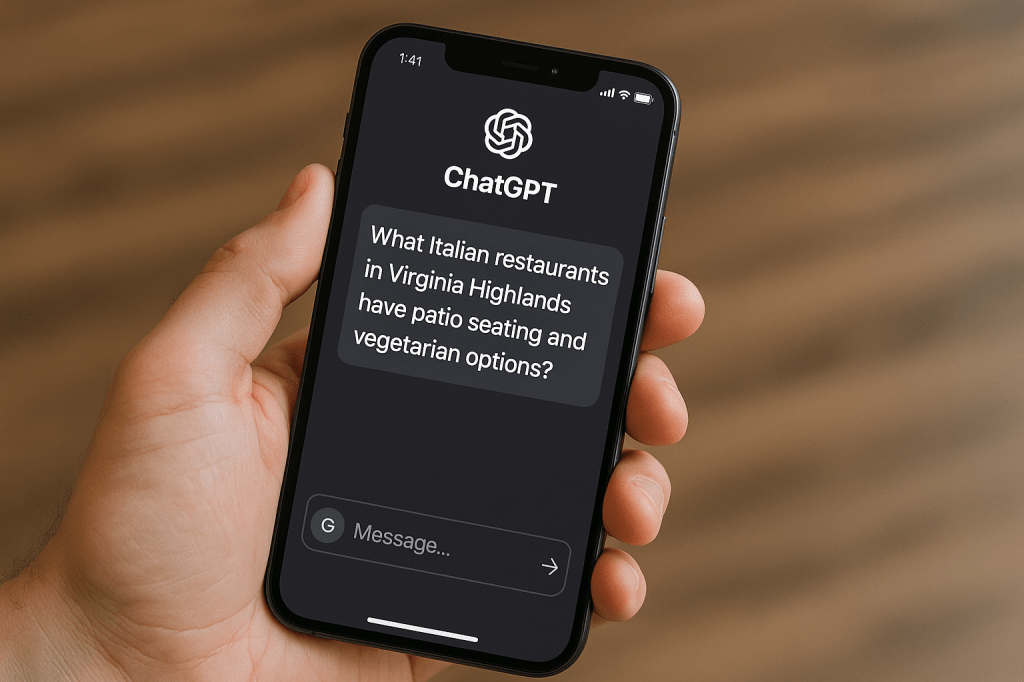
How customers find your products, services, and expertise is changing fast. The days of typing stiff keyword strings into a search bar are giving way to natural, conversational, intent-driven queries powered by search AI. For small and mid-sized businesses (SMBs), this shift fundamentally changes how you attract, convert, and keep customers online. If you adapt now, you stay visible and competitive. If you don’t, you risk fading from the results your customers actually see.
Let’s walk through how AI is reshaping search, and what you can do to thrive.
What is Search AI and why does it matter for SMBs?
Search AI blends artificial intelligence, natural language processing, and machine learning to understand what people mean, not just what they type. Instead of matching keywords, it interprets context, intent, and nuance.
So when someone asks, “What’s the best local bakery that delivers gluten-free cupcakes today?”, AI doesn’t just scan for “bakery” or “cupcakes.” It looks for businesses with clear, structured, up-to-date, trustworthy info that matches that exact intent. If your website doesn’t provide that context clearly, including hours, offers, inventory, delivery windows, and reviews, you can disappear from view, even if old-school SEO once worked.
How Search AI is changing the customer experience
AI-powered search has raised the bar. People expect fast, friendly, and personalized answers right where they’re searching. Here’s how that affects your presence.
- Personalized, contextual results
Results are tailored by location, behavior, and intent. If someone searches “eco-friendly cleaning services near me,” you’ll show up only if your local data, service pages, and reviews consistently reinforce that positioning. Keywords still matter, but context matters more.
- Voice search and conversational queries
With Alexa, Google Assistant, and Siri, natural questions are the norm. People ask, “Who’s the top-rated landscaper open this weekend?”, not “landscaper weekend hours.” To be found, write your site copy and FAQs in a conversational Q&A format that mirrors how customers actually speak.
- Zero-click searches and featured answers
Search engines increasingly surface instant answers on the results page. Yes, that can reduce clicks. But if your content powers those featured snippets, you gain credibility and mindshare. The new SEO goal isn’t just ranking, but providing the answer.
The good news is that you don’t need a huge budget. You do need smart structure, clear messaging, and consistent updates. Here’s how to get started.
How SMBs can adapt and win with Search AI
- Optimize content for questions and intent
Shift from “ranking for keywords” to “answering customer questions.” That makes your content more useful to both people and AI.
• Create FAQ-style content: Dedicated pages that directly cover pricing, turnaround times, delivery areas, policies, and service details.
• Use natural language: Write like you talk to customers, in a clear, concise, and helpful manner.
• Keep content fresh: Outdated hours, menus, inventory, or policies erode trust and visibility. Review and update regularly.
- Leverage structured data (schema)
Schema markup is code that helps search engines interpret your content precisely. Think of it as labeling your information so AI can deliver it confidently.
• Add relevant schema: LocalBusiness, Product, Service, and FAQPage are common winners.
• Complete your Google Business Profile: Keep it fully filled out with accurate info, posts, photos, and timely updates.
• Ensure NAP consistency: Your name, address, and phone must match across your site, maps, and directories. Reliability matters more than you might think.
- Prioritize mobile and accessibility
Most AI-driven searches happen on phones. A smooth mobile experience is what your audience expects and deserves.
• Design mobile-first: Fast load times, legible text, simple thumb-friendly navigation.
• Follow accessibility best practices: Proper headings, alt text, good color contrast. This improves user experience and helps AI parse your site.
• Improve speed: Slow pages get demoted. Audit performance and fix bottlenecks.
- Build topical and local authority
AI rewards expertise and consistency. Show you’re a trusted pro in your niche and community.
• Create pillar pages: Comprehensive guides like “Complete Guide to HVAC Maintenance” or “Everything You Need to Know About Maintaining a Salt Water Pool.”
• Publish valuable content: How-tos, checklists, comparisons, and original insights that demonstrate know-how.
• Earn reviews and testimonials: Fresh, positive reviews are powerful trust signals for people and algorithms alike.
The bottom line
AI-driven search has changed the rules and opened new opportunities for SMBs that adapt. Your future customers aren’t typing stiff keywords; they’re asking real questions. And search AI is deciding who gets to answer.
By aligning content to intent, implementing structured data, keeping business info accurate, and delivering a fast, accessible mobile experience, you keep your brand discoverable and trusted. Don’t wait for traffic to slip. The businesses that prepare now will be the ones AI chooses tomorrow.
What about you? Have you started optimizing your site for Search AI?

 lead up
Leave a comment