If there’s one thing I’ve been saying at nauseam in internal conversations: There’s no such thing as over- communicating when it comes to your customers.
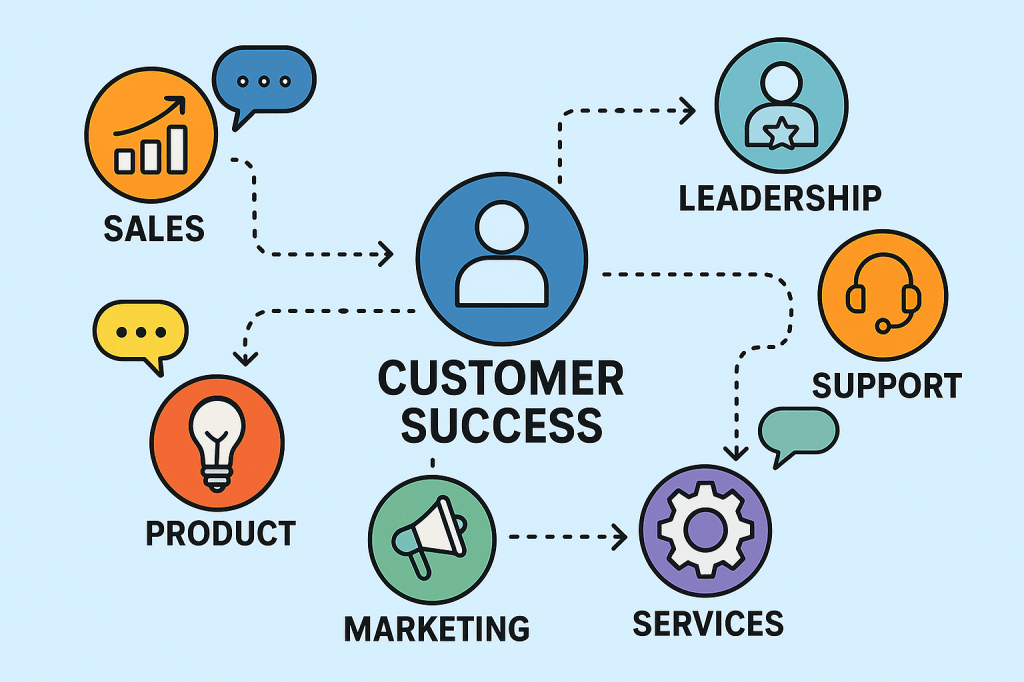
We’ve all experienced first hand how some organizations treat customer communication like a one-lane road, owned and operated solely by the customer success or support team. But the truth is, our customers don’t experience our companies in silos at all, so why shouldn’t operate that way? When you open up communication across teams and create visibility into what customers are experiencing and sharing, you can build a culture that’s not just customer-friendly, but customer-obsessed, which is a much better place to be in.
Here’s why I think it matters, and how you can start fostering a that culture.
Create a dedicated Slack channel
Nobody wants more meetings, so you can start with a cross-functional Slack channel for customer insights. This can be your internal hub for things like:
- Good news: big wins, unsolicited praise, successful launches
- Red flags: early signs of dissatisfaction, usage drops, missed expectations
- Complaints: even if they’re tough to hear. You need to share what’s really going on without sugarcoating.
- Challenges and blockers: recurring issues, misalignments, confusing parts of your product
- Aha moments: when a customer uses your product in a brilliant, creative, or unexpected way
Don’t restrict access to the channel. Invite Sales, Product, Services, Marketing, and Leadership, and really anyone who touches or impacts the customer experience. You might be surprised by the insights that come from someone who isn’t a Customer Success Manager. A marketer may have seen a trend. A developer might immediately understand the root cause of an issue that the customer is reporting. An account executive might chime in with helpful background from the buying journey. If you’re worried about overloading your team with messages, just make it clear that not everything requires an acknowledgement, let alone a response.
Make customers a part of the weekly conversation
Sharing updates in Slack is a good start, but not everyone looks at those updates all the time, and you don’t want to miss the opportunity to drive change. Make some space in your weekly company updates or all-hands meetings for a quick customer snapshot. It doesn’t need to be a full write-up or polished presentation, just a few minutes to surface recurring themes, such as
- Are multiple customers asking for the same functionality?
- Did a recent update excite users or confuse them?
- Are there usage patterns indicating onboarding gaps?
- Were customers not aware of a newly implemented feature or a service that you offer?
These patterns should inform roadmap conversations, onboarding optimization, and sometimes even hiring.
In addition, encourage your team to stay informed and curious about what’s going on in your customers’ world that may not have anything to do with your product or service. We share at least three articles about our customers every week in our weekly updates, because it makes us appreciate everything that our customers do and how they make the world a better place.
Break down the walls between roles
One of the most impactful things you can do is give everyone the opportunity to interact with customers, especially when they can add unique value. For example, let your engineers sit in on customer success calls. Encourage your marketers to attend quarterly business reviews. Invite your product leaders to join customer onboarding calls. Empower your sales reps to loop in implementation developers earlier in the sales process (if they have the bandwidth, of course).
The point is not to flood your customers with too many touchpoints, but to bring more clarity, more empathy, and more value to every interaction. When customer knowledge lives in silos, things tend to fall through the cracks, issues get repeated, feedback loops can break down, and your teams make assumptions based on partial or outdated information.
But when customer communication is shared, celebrated, and acted on:
- Product decisions feel less speculative
- Marketing becomes more relevant
- Support becomes more proactive
- The team starts speaking the customer’s language
- Empathy grows
You can create alignment not just on what you’re building, but who you’re building it for. Make everyone listen to your customers. Because when your whole company becomes part of the customer conversation, you build stronger relationships, better products, and a clearer sense of purpose.
What about you? How much communication about your customers is too much?

 lead up
Leave a comment