Is it time to normalize “unmuted”?

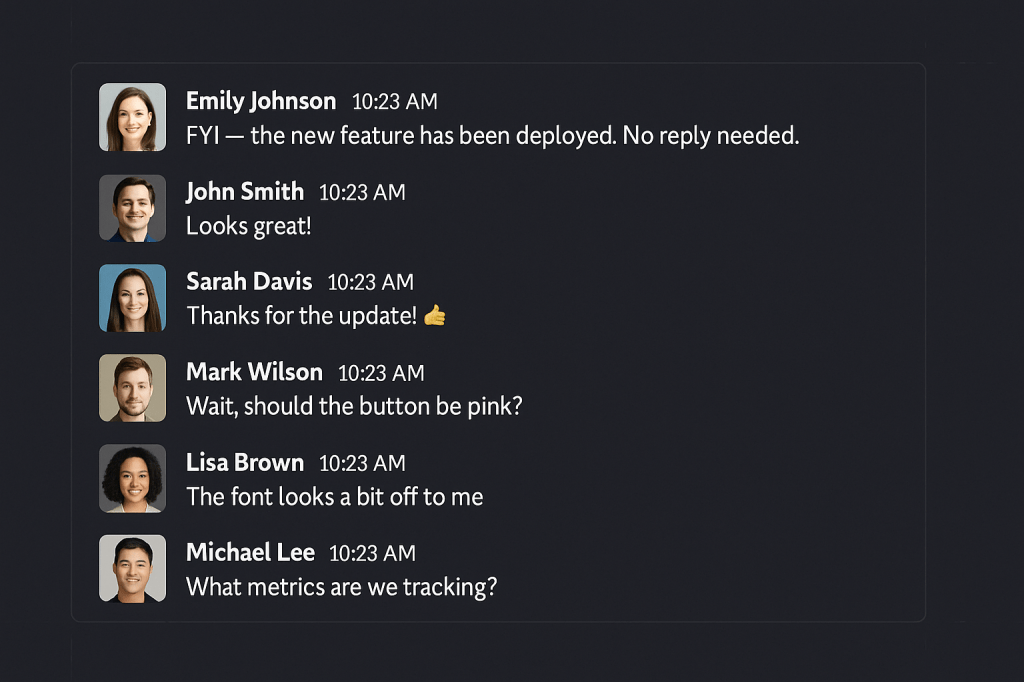
Is there ever a virtual meeting where the sentence “You’re on mute” isn’t uttered at least once? This is then typically followed by a joke (“Every single time!”, “What, you can’t read my lips?”) or an apology. Does that completely derail the conversation? No. But it’s an unnecessary disruption. Being on “mute” has become the default for many people, but should it be? 

By defaulting to the “mute” button, we create an unintentional barrier to natural interaction. If you were in an in-person meeting with a group, you wouldn’t tape your mouth shut. Embracing open audio channels can foster more authentic conversations, where participants feel connected and engaged, almost as if they’re in the same room. It encourages active listening, quicker responses, and a more fluid exchange of ideas, making meetings feel collaborative rather than isolated. It also makes the immediate feedback loop tighter and more authentic. Whether it’s a laugh, a “wow”, or even a gasp or other expressive sound, the feedback is valuable. You simply don’t get this when everyone is muted and meetings feel more like webinars. 

What about background noise, you may ask? Yes, there may be an occasion where an unexpected loud noise would be a distraction. For example, if the landscapers blow leaves right in front of your window. In those cases, if you can’t relocate to another room, by all means, hit the mute button. But minor imperfections, such as a cough or a sneeze are part of human life, and you would certainly hear them in an in-person meeting. Why not bring a little humanity back to our virtual workspaces. Now, if uncontrollable noise constantly interferes, that’s a broader issue to address.

Similarly, keep your camera on if the other participants have theirs turned on. You wouldn’t hide under the table in an in-person meeting, right? Show your co-workers, partners, or customers that they have your undivided attention. And give them your undivided attention. It’s easy to tell when someone is clearly working on other things, and it can often feel disrespectful or even demoralizing when someone is engaged in something else. I realize that there are different opinions on this particular subject, but personally I am not a fan of exercising, driving (please don’t!), cooking, playing the piano or doing other things while in a meeting. 

Let’s prioritize genuine communication over pristine silence. The next time you hop on a call, consider leaving that mute button off (and turning the camera on). 

What about you? Are you muted or unmuted?

Venting: The not-so-silent culture killer

We’ve all been there. We experience frustration with a certain situation, or we simply disagree with a decision. Oh, how tempting it is to find a sympathetic ear and vent “to get it out”! Naturally, as we vent, our stories become colored with assumptions and are less focused on problem-solving. But that is just one of the many downsides of venting, which don’t just negatively affect you, but often your team and the company culture. Let’s take a deeper look at why we vent, why it’s bad for us, and how we can transition to a better approach.

Why we vent and let others vent

Venting makes you feel closer to the person that you’re venting to, says Ethan Cross in his article in EdWeek. When we are frustrated with something or someone, we look for allies and seek validation of our righteous indignation. In a post-pandemic world, a rather strange economic and quite divisive social climate, we crave a sense of support. Bonding over a perceived shared grievance seems to be an easy solution. We vent or we indulge someone else’s venting. For example, a new manager who wants to ingratiate themselves with their direct reports might not just listen to them complain, but actually fan the flames because it creates a sense of bonding. A team member who has been feeling disconnected might engage in venting with a colleague to feel a sense of camaraderie. 

Venting causes energy-levels to go up. A disengaged employee will feel energized, albeit in a negative and counter-productive way when complaining to a team member about a perceived injustice, unwanted behavior or decision. After all, the spurt of energy feels better than indifference or disengagement. 

Another reason why we vent is rooted in the misconception that it will make you feel better, which has been perpetuated for decades. It is often our go-to strategy. Even if we don’t vent in the workplace, we may go home and unleash our frustrations and the stories we’ve told ourselves on our spouses and partners, who may or may not be equipped to redirect the conversation into something more productive. 

Why venting is bad for us 

Contrary to popular belief, venting does not have the healing effects that we often attribute to it. Jill Suttie outlines the dark sides of venting in her article on Greater Good Magazine. “emotional venting likely doesn’t soothe anger as much as augment it. That’s because encouraging people to act out their anger makes them relive it in their bodies, strengthening the neural pathways for anger and making it easier to get angry the next time around”. So as we are venting, we don’t release our frustrations and grievances, but we’re making ourselves go through them again, often augmenting them, thus releasing higher cortisol levels into our bodies, which can result in a higher heart rate and even higher blood pressure, the long-term effects of which can’t be underestimated. 

Anna Maravelas’ book “Creating a Drama-Free Workplace” dedicates an entire section to the perils of venting. She points out the adverse impact on our health as well as the effects on our professional standing and credibility, and our company culture. When we’re in a venting mindset, she says, we’re “flooded”, which greatly impairs our ability to problem-solve. She also points out that venting can damage your relationships with your colleagues, who might know that if you speak ill of someone else, you likely speak ill of them as well. We could also be considered hypocritical. For example, if Bob unloads on John a litany of why Jane is unqualified, lazy, and just doesn’t care about the team and then acts delighted when interacting with Jane, John might consider Bob a hypocrite and assume that Bob will have no qualms talking poorly about him. This clearly does not foster a culture of trust. Instead, Bob does what Maravelas calls “bankrolling drama at the expense of seeking solutions.” It can even have a bigger ripple effect. If the venting revolves around the assumption that key players or leadership just “don’t care” why would team members feel that they are part of something great? Why would they continue to be engaged?

The “feel-good” sensation that we experience when venting can be compared to scratching a mosquito bite or rubbing our itchy eyes. It might feel good at the moment, but it doesn’t help. In fact, you irritate your body even more and crave more scratching. Now think about what you’re doing to the person that you’re venting to: you’re essentially scratching them or rubbing their eyes. Does that seem like a good idea? 

How to stop it

The good news is that we are capable of change. We just have to learn better techniques once we recognize the negative impact of venting. 

In preparation for one of our company meetings, we asked everyone to watch Cy Wakeman’s clip entitled “Why venting is unhealthy and wrong”. The discussion that ensued was wonderful. Many of us acknowledged that we had always thought that venting had a positive effect by getting frustration out of our system. We also admitted that we all vented at times. Looking at it from a new perspective was eye-opening. Awareness is the first step to improvement. 

Following Wakeman’s philosophy of reality-based leadership provides a great framework for establishing a culture of accountability and support. Before you go down a downward spiral, ask yourself “What do you know for sure?” For example, you may think that a team member doesn’t care about your department’s success because they missed a deadline. What do you know for sure? They missed a deadline. That’s it. Everything else is an assumption. If we follow the guideline of “the only acceptable assumption is to assume good intentions”, then we could stop our negative thoughts and start determining how we can help the situation and the team member. Similarly, we can help others by redirecting the conversation accordingly. Instead of fanning the flames of Mary’s indignation about Jack’s attitude/lack of respect/know-it-allism, you can make simple suggestions about how Mary can help Jack. This may be frustrating to Mary at first, but in the long term, you are increasing your chances of a better relationship between the two and an elevated company culture. Instead of getting a high from venting, help Mary get a “helper’s high,” as Maravelis calls it. 

You may also stress the importance of locus of control, which could be part of your company values. The team members who are most appreciated and most successful focus on things that they can control, not on external factors. They don’t play the blame game, they don’t form alliances against others, but they solve problems. Consider making locus of control part of your check-ins

Another technique involves talking about your own feelings and the impact on your own solution-finding abilities. How about showing vulnerability by saying “Steven, I want us to have a productive conversation that will be a win-win situation, but the way you’re communicating right now is not allowing me to problem-solve. Could we reconvene later today and focus on facts and how we all can help contribute to a solution?”

Hold yourself and your team members accountable. Stop yourself when you have the itch to vent. Find things to be grateful for, suggests Dr. Firdaus S. Dhabhar, Ph.D., a professor at the University of Miami Miller School of Medicine’s Department of Psychiatry. He also recommends channeling your energy into productive, healthy activities like exercise, spending time in nature, working on your hobbies, listening to music, meditating, or sleeping. Most importantly, “spend time with people you have meaningful connections with and focus on positive things.”

As there is overwhelming evidence about the negative effects of venting, let’s help each other develop healthier and more productive ways to handle frustrations. We’ll be better off as individuals and as a team. 

What about you? What are your ideas for eliminating venting and fostering a more cohesive, healthy, and positive company culture?  

When your behavior doesn’t match reality

In order for you to achieve both your short term and your long term business goals, you have to have a deep understanding of who you are as an organization. It’s imperative to have ambitions and to envision what you ultimately want your company to be and to look like, and it’s just as important to understand where you are currently and to act accordingly. Failure to understand the current reality or to have a false sense of self will make it much more challenging to get to where you want to be in the future. Here are a few examples.

Automating too much

If you count on customer service to be a key differentiator, ensure that you are giving your customers the individual attention they deserve. As you are growing your customer base, there might come a time when your team starts to think too much about scaling up, prematurely, and doesn’t focus on the personalized service they should be delivering. If you spend more time on automation than on actual service, reconsider your approach. Don’t automate yourself into indifference, but instead analyze how much personalized outreach and attention you want and should give each customer and find a way to make it happen. 

Delegating too much or too little

As a manager, you may worry about delegation. Are you delegating too much? Too little? Once again, it comes down to critically assessing who and where you are as a company. This is particularly important when it comes to interacting with customers. As a company with several hundred enterprise customers, do you think upper level management should engage with individual customers? I do. But the threshold is, of course, different for each organization. The key is to act according to your reality and not your aspirations. Does your VP of Product need to be involved in certain levels of UX decisions, or would it make sense to empower team members to make the call? If it’s the latter, what do you need to do to make it so?

The “I shouldn’t have to” trap

Another example of potential incongruence between your reality and your thoughts can be found in the “I/We shouldn’t have to trap”. If you catch yourself thinking “I shouldn’t have to tell them to make calls”, “We shouldn’t have to tell them that this issue needs to be resolved immediately”, “I shouldn’t have to remind them how important response times are”, or “We shouldn’t have to postpone the release” (you get the picture), stop for a minute to re-think, because clearly, you have to right now. Instead of an internal eye roll, accept that you are not where you want to be, analyze the reasons for it, and identify the steps necessary to improve the areas that are causing you heartburn.

Misreading your culture 

Your company culture can be one of your biggest, if not your biggest, assets. It’s how people feel after interacting with one of your team members. It’s where the company handbook leaves off and how people act when nobody’s watching. A great culture spawns a sense of pride, and rightfully so. It’s only natural to brush off things that aren’t quite perfect, or to overestimate or underestimate certain parts about your team. Your team may be such an integral part of you that you may be blind to certain shortcomings, but if you are, you don’t empower yourself to help them improve and become even more successful. 

Being realistic about where you are and who you are is a necessary step towards moving towards your goals. Be sure to always take inventory, self-reflect, and make adjustments, not just when the results don’t match your expectations.

What about you? Can you think of situations in which not being brutally honest about your reality could adversely affect your company?

Ideas for weekly company updates

Even though we are a relatively small company, where everybody has plenty of opportunities to interact with anyone in the organization and to ask questions, we always want to identify ways in which we can increase transparency. For instance, we have several Slack channels in which we share pertinent information, such as #customer-shareable-news, #product-happenings, #customer-success, and #praise. In our weekly company meetings, the departments take turns presenting pertinent updates, projects, goals, and initiatives. We also experimented with dashboards that we projected in the office. Another thing we’ve been doing for a long time is weekly updates, which I write and share via email and Slack every Friday. It’s a narrative of notable developments and achievements in the past week and intended to provide context instead of just projecting KPIs. The format and the content continues to evolve, as it should. Currently, the updates contain the following components:

Positive news of any kind

I enjoy starting the update with some positive news, whether it’s a new customer coming on board, a milestone that has been reached, a milestone “Hannoversary, the birth of a child, or a pet having gotten adopted by a team member. 

Department updates

I summarize the main notables by department. Since each team member posts their daily updates on Slack, there’s no need to rehash what each individual accomplished. Instead, I mostly speak in the first person plural and talk about our main accomplishments, such as a new release, newly created content, and demos or training sessions completed. In addition, it’s helpful to outline any new initiatives or changes, including the reasons for those changes, and challenges that either a department or the company as a whole are experiencing. Upcoming events, such as webinars, conferences, community service, or celebrations also tend to be shareworthy. 

Shoutouts

Good work needs to be recognized, whether it’s something tangible like the implementation of a new feature or a glowing testimonial or praise from a customer for helping them with the rollout of their new site, or something less tangible, such as when an employee went above and beyond to help another team member or made a significant positive contribution to the company culture. 

Calls to action

Weekly updates are a good way to remind your team of things that they need to do, such as completing their benefits selections during open enrollment or submitting their engagement surveys. CTAs can also include any type of help you or another team member is looking for, such as “If you come across any recent client examples of intranets, please share them with X”.

Content you might find interesting

I curate three articles per week and share them in a section entitled “Content you might find interesting”. They generally cover a wide array of topics, including, but not limited to customer service, time management, life hacks, user experience, product roadmapping, productivity, and relevant technologies. Note that it doesn’t have to be limited to articles and blog posts. You can mix it up with podcasts or videos, such as Ted Talks.

Customer news

Our customers are changing the world, as they shape and educate the minds of generations, by building and improving communities, fostering the arts, and spearheading technological and medical breakthroughs. We always think about them in this way, and we give them our utmost support and effort to provide them with the products and services that they deserve. It’s important for us to know what’s going on with our customers, so each week, I include three stories in my updates. 

KPIs

Since the company’s success and well-being is everyone’s business, I share KPIs around revenue, such as total revenue to date, monthly recurring revenue, and net retention. Be sure to include the goals for each metric as well. 

Question of the day

It’s fun to end the weekly updates with a question and encourage communication, especially on a Friday. The question can be anything at all. Here are some recent examples: “What’s your favorite meal in the summer? Feel free to share a recipe!”, “If you had to compete in the upcoming summer Olympics, which two sports would you pick? Bonus question: What would you make an Olympic sport in order for you to be a fierce competitor?”, “What have you read recently that you would recommend?”

What about you? What would you recommend including in weekly updates?

A few more thoughts on returning to the office

A few months ago, I outlined some of the main reasons why we were going to return to the office once it’s safe to do so, including more impactful communication, increased empathy, inspiration, better integration of new team members, and ensuring focus on what’s best for the team as a whole. Starting next week, we will be back in the office twice a week. Sure, after 15 months of working from home, it will require some adjustments, and I am certain that not everyone will be completely thrilled. Fair enough. For most people, it is much more convenient to work from home. Many employees report being more productive when they’re not in the office. So when making a decision for your business, try to determine what is best for the team as a whole.

In her recent LinkedIn post, Rachelle Kuebler-Weber does a great job anticipating some of the pushback with regard to going back to the office, and pointing out some of the tangible and intangible benefits of working together in the same space. She mentions different behavior patterns, synergy of proximity, and the separation of work and home, for instance. It got me thinking about misconceptions that some of your team members may have when they’re being asked to come back to the office, even in a limited way, and how to establish clarification.

Of course, remote employees contribute value!

One of the questions that you might receive when discussing the positives of working in the same physical space is “Don’t you think that remote employees contribute value?”. Of course I do! And we have to think of ways in which they don’t just contribute tangible deliverables that are a result of being “heads down”, but also ways in which they help with cross-departmental support, collaboration, and innovation. But is it reasonable to expect that someone who works remotely and in a different time zone will sense that a new team member is having a bad day and take them for a cup of coffee to provide some pointers? Or that a junior BDR will be enabled to learn by osmosis by listening to seasoned reps when they make calls or discuss next steps with each other or with prospects, or when they’re not in the same space? There are some ways to mitigate those challenges, but it’s fair to say that the expectations of someone who works remotely and someone who is in the office at least part of the time differ. That doesn’t mean at all that remote employees don’t contribute value. It’s simply different. And in our case, we need the value, energy and synergy that comes with being in the office, too, which is why we have both local and remote team members.

It’s not all about individual productivity

Productivity is one of the most frequently used arguments for remote work. And yes, I am aware that there are stats that show that a good number of people work longer hours when they work from home (which isn’t always a good thing, though) and also lots of team members who are more productive remotely. I think I fall into this category myself. But individual productivity is not everything. It’s also about building a supportive environment in which people can get help by having in person ad hoc conversations rather than waiting for hours for a response on Slack, taking time to type large paragraphs rather than just talking in person, or having to put a Zoom meeting on the calendar. It’s also about listening to conversations that are going on in the office and with customers, inspiring others to do great work, reducing video call fatigue, listening to someone vent, and making offhanded comments instead of having to type out every single thought. 

Productivity is not necessarily the same thing as success

“But we have so many people who are super productive when they work remotely”. Yes, I am certain that that’s the case. But is productivity the only criteria of success? It really depends on what your business goals are. I’ll take more compassion and communication over a single focus on productivity any day. If maximum productivity in our company automatically means greater customer satisfaction, more thoughtful internal (!) and external communication, better products, better onboarding, more meaningful work, and reaching your growth goals, great. But it may not be the case for other organizations. 

Someone’s “flexibility” is another one’s lack of structure

“Flexibility” is a term that most of us would equate with something positive, right? It means that you have the freedom to do what’s best for… you? The company? While it’s generally a good thing, especially in crazy times like these, to allow people to structure their days in ways that accommodate personal needs (for instance, how about being in the office from 11-3 so you can avoid traffic?), we should also recognize that one person’s flexibility is another one’s lack of structure. Be sure that you’re equipped to help each team member be their best. Sometimes, that involves providing more guidance, shorter deadlines and milestones, and more oversight, even when it’s not the way they prefer it. After all, flexibility should go both ways. 

What’s best for the individual is not always best for the team

As a manager, you want to make sure that every individual is empowered to contribute to their own success and the success of the company. But you can’t just look at individuals. You also have to do what’s best for the team as a whole. You have to consider the desired outcomes for your organization. Here’s an argument that you might encounter: “Why do you punish the A players by having to come into the office just because we have some B players who can’t be productive at home?” Another fair question. First off, identify why coming into the office is considered a “punishment”. Secondly, Michael Jordan probably would have gotten away with skipping practice a few times. However, his drive and his dedication to excellence made his teammates better. (Note that if you do have so-called B players on your team, you have another challenge to overcome, but that’s a topic for another day.) Good work inspires more good work. And putting personal preferences aside every now and then for the good of the team and a sense of community may not be an unreasonable ask. That’s why I have high hopes for the hybrid model of being in the office a couple of times a week. 

Stop silo thinking, and curb it in others

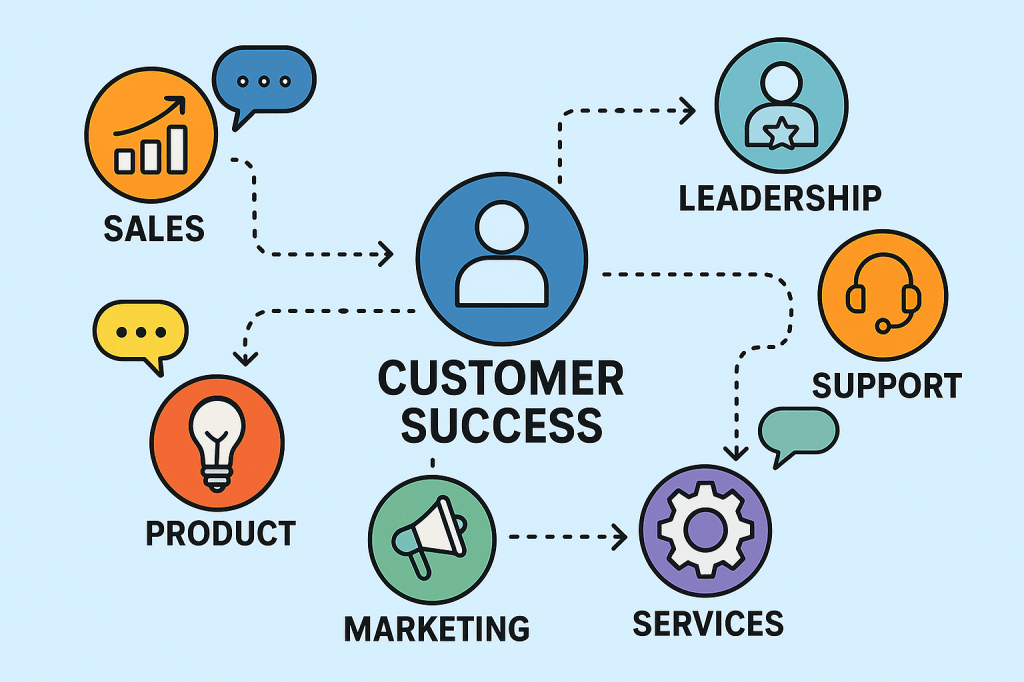
Different roles may be more conducive to “flexibility”, so if you can find a way to provide different set-ups for people in a fair manner, go for it. For instance, someone who is in a customer-facing role might not be able to do most of their work after hours. Be as “fair” as you can, and also make clear that we’re all connected. Just because someone is not in Sales doesn’t mean that they don’t have an impact on the way the Sales team does their job. If customer service is one of your competitive advantages, be sure that the level of dedication to the customer is lived and witnessed every day. Try to avoid  A “not my department, not my problem” mentality.

Think about ways to facilitate more collaboration

If collaboration is important to you, think of ways to facilitate it, whether that’s by rearranging the configuration in the office, implementing ShipIt Days or task forces, or by having cross-functional lunches. Just because you may not have been able to achieve the levels of collaboration in the past, it doesn’t mean you need to stop trying. And, find ways to include your remote workers, both digitally and in person. Consider having them join you in the office at least occasionally. 

If you have your eye on the prize of a popularity contest, it’s probably easier to let everyone choose their own work environment and schedule at all times. But remember, only by doing what’s best for the company are you holding up your end of the bargain, and, at the end of the day, providing meaningful work and professional opportunities for your team members for years to come. And what’s best for one type or size of company may not be best for another. In addition, finding the right balance between individual preferences and team outcomes, and heads-down/remote time and in person collaboration might take a few months, so as always, be prepared to adjust as needed.  

When you do return, exercise compassion. The past 15 months have certainly put our resilience to the test and gotten us into new habits that might be hard to break. It will be a big change to get in the car again, to arrange for pet sitting and child care, and to get used to working around other people again. Let’s cut each other some slack and give each other the benefit of the doubt. 

What about you? What are your thoughts on returning to the office a couple of days a week?