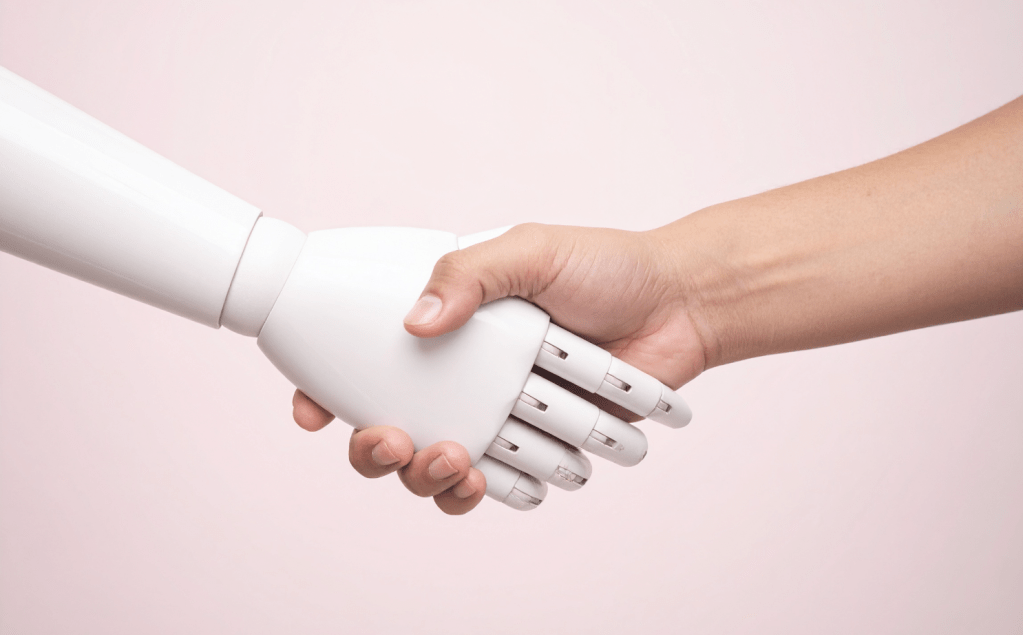
ai and human shaking hands

From day one to day 90: Using ChatGPT to support onboarding and continuous learning

Why AI can transform onboarding and training

Onboarding and continuous learning are critical to building a strong, capable workforce, but they can also be time-consuming and inconsistent. New hires often feel overwhelmed due to  information overload. At the same time, managers are stretched thin trying to provide personalized support. Therefore, it’s no surprise that companies are starting to explore ways in which AI can help provide a scalable and accessible way to enhance the onboarding and training experience. This isn’t about replacing human interaction, but about making important information more consistent, approachable, and available on demand. For the purpose of this post, we will focus on ChatGPT.

Instant and personalized knowledge bases

ChatGPT can act as an always-available assistant for new hires, answering common questions about processes, policies, tools, and culture. Instead of waiting hours or days for a manager’s reply, a new team member can ask simple questions such as “How do I submit a PTO request?”, “How do I request help from IT?”, “Who needs to approve external communications before they’re published?” or “What branding guidelines should I follow when creating social media posts?”. Note that it’s easy to train custom versions of ChatGPT by feeding it internal documentation like your handbook and communication playbook, to deliver answers specifically for your company. 

Role-specific learning paths

Managers and HR teams can use ChatGPT to quickly create customized onboarding checklists or learning plans for different roles. For example, you can use a prompt like “Create a 30-day onboarding plan for a new Customer Success Manager for a SaaS company/[your company]”. You can even take it a step further by asking for key success metrics or for further details about a specific objective, for a daily planner that includes recurring meetings like stand-ups, or for a table indicating which tasks involve other team members and which ones are self-guided. 

This approach ensures that every new hire has a thoughtful, structured experience without requiring managers to reinvent the wheel every time.

Practicing scenarios and soft skills

ChatGPT can simulate real-world conversations, giving new hires a chance to practice soft skills in a safe environment. For example:

  • Handling a difficult customer interaction
  • Conducting a feedback conversation with a colleague
  • Asking questions during a discovery call
  • Conducting a Quarterly Business Review (QBR)
  • Managing a customer who missed key onboarding deadlines.

Just provide ChatGPT with instructions like “Act as a customer who…” or “Simulate a situation where…”, or “Pretend to be a user who”. These role-playing exercises help employees build confidence and prepare for real-world challenges before they encounter them.

Reinforce ongoing training

Of course, training doesn’t stop after the first 90 days. ChatGPT can also serve as an ongoing resource for you when it comes to things like

  • Quizzing employees on company values, product knowledge, security protocols, or value proposition
  • Scenario testing, where employees can walk through different case studies and challenges.
  • Microlearning sessions, allowing employees to engage in bite-sized learning at their own convenience.

Here are some examples:

After a new product release, Customer Success Managers could quiz themselves on the new features by using prompts such as “Give me 5 multiple-choice questions about [product]’s new feature rollout.” Or an Account Executive could ask ChatGPT to act as a specific buyer persona and provide feedback on how well the AE explained the value of a specific feature set. You can also use the tool to help prepare for potentially uncomfortable internal conversations. For example, you can ask ChatGPT to “Act as a teammate to whom I need to give critical feedback about their time management skills.”. Examples of microlearning opportunities are a CSM quickly refreshing their knowledge on upcoming feature names before a call with a customer, or a Support Engineer getting a summary of the last 3 releases to help explain to a customer why they should upgrade to the latest version of the product. 

Fostering a culture of continuous learning is not just beneficial for everyone, but it can also be fun. Consider creating a Slack channel where team members discuss creative uses of AI that help them in their roles. 

Support managers and team leads

ChatGPT isn’t just for new hires, but it can also be a valuable tool for the people supporting them. Managers and trainers can use AI to:

  • Get suggestions on how to improve existing training materials
  • Provide ideas for mini-”homework” assignments for each role on the team to continue to sharpen their skills (“Explain our newest feature like you’re talking to a non-technical customer”)
  • Help team members hone their communication skills (for instance, have ChatGPT generate an email from a customer who is frustrated with something specific and then assign the team member the task to respond to it)
  • Reinforce knowledge of new product features, internal tools, or SOPs by having team members quiz themselves (“Summarize the top 2 use cases for marketers and for developers when interacting with X”).

By using ChatGPT, managers can make professional growth feel more continuous and accessible, help employees practice in a safe space, and foster a culture of curiosity, all without adding heavy training costs. It also frees up time spent on repetitive tasks and frees managers up to focus more on mentorship.

These are just a few ideas on how to use ChatGPT to help with onboarding and continuous learning, making it more consistent, accessible, and effective, while allowing managers and team leads to have more time for individual coaching. By combining the best of human guidance with the capabilities of AI, organizations can create a better experience for everyone involved.

What about you? What are your ideas for using ChatGPT for onboarding and ongoing training?